01 / THE HUMAN BEHIND THE HARDWARE
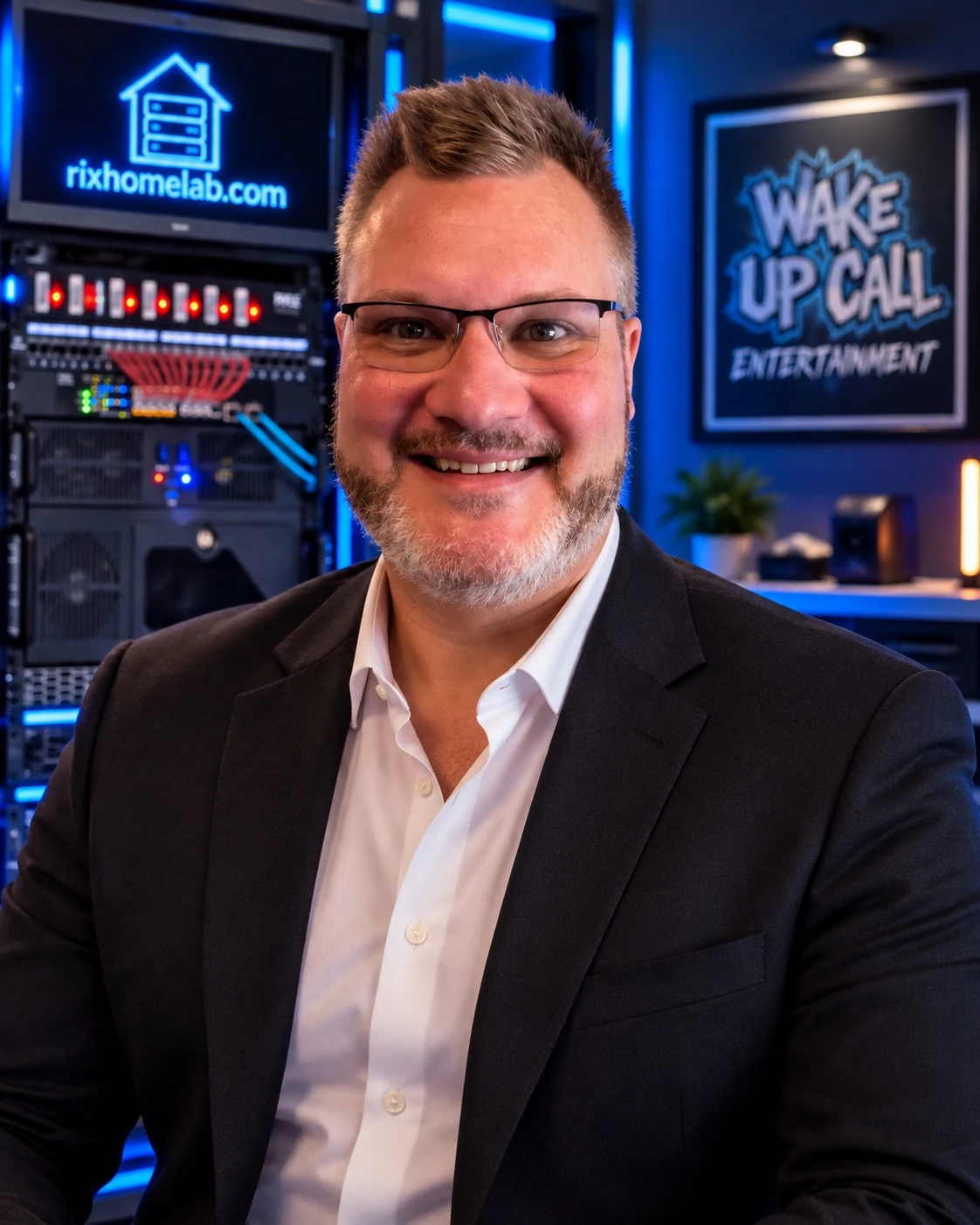
Meet Rick.
Founder of RixHomeLab. DJ by passion. Tech tinkerer by obsession. Firm believer that one server is never enough.
Some kids were content playing with electronics. Rick wanted to know what made them tick, why they worked, and whether they'd sound better with bigger speakers. That curiosity has been causing trouble ever since.
02 / ORIGIN STORY
Started young. Probably too young.
Long before the rack, the networking equipment, and the blinking lights, there was a kid who loved music and had an almost supernatural inability to leave electronics alone.
Rick's earliest projects were usually about making things louder. Boom boxes, alarm clocks, stereos: if it contained a speaker, he wanted to know whether a bigger one would fit.
His more questionable experiments included removing the guard from a running window fan (his mother intervened before anything was put into the blades) and connecting tiny RC car motors directly to a wall outlet.
Somehow, he survived long enough to discover computers.
03 / PARTNERS IN CRIME
Two brothers. One insatiable curiosity.
Growing up, Rick was rarely exploring the world alone. His younger brother Ryan was his partner in crime, near-constant companion, and fellow investigator of anything interesting enough to take apart or figure out.
They were practically inseparable as kids. And when Rick started upgrading computers, the retired components didn't go to waste: they helped Ryan put together his first custom-built PC. Ryan caught the bug, too.
Over time, Ryan gravitated toward working on cars, shooting, and whatever fascinating subject crossed his path, while Rick kept chasing computers and networking. Different hobbies, same sponge-like minds.
04 / FIRST BOOT
Eight dollars a week. Thirty megabytes.
As a junior in high school, Rick paid his math teacher, Gary Kasten, $75 for his first personal computer: a Packard Bell 8088 with a monochrome monitor and a magnificent 30-megabyte hard drive.
His technology budget was supported by an $8-a-week paper route. Somehow, he upgraded that Packard Bell until he'd squeezed about everything he could out of it.
That was the beginning of a much larger—and considerably more expensive—rabbit hole.
PACKARD BELL 8088
MEMORY: CURIOSITY
HDD: 30 MB
COST: $75
HIGH-SCHOOL HARDWARE / circa early days
05 / LEARNING BY DOING
Self-taught. Then supercharged.
In the days before internet search, Rick learned by trial and error. A BASIC programming class in high school showed him how to make a computer do what he wanted it to do. A local computer shop owner became another important source of knowledge—and a frequent recipient of Rick's money.
After high school, he took CompTIA A+ and Network+ certification courses, building on the practical skills he'd developed for himself.
Then the internet arrived. And Google made it possible to seek out information about exactly the thing he wanted to learn, right when he needed it.
The questions never stopped. The answers just got easier to find.
06 / THE HOMELAB EVOLUTION
One old PC. An entire laboratory later.
The first server wasn't anything remarkable: an aging Windows machine with a third-generation Intel Core i5 processor and 8 GB of RAM. Rick wanted to rip his DVD collection to a hard drive and watch it anywhere in the house.
He researched media servers, discovered Plex, and made that first magical connection to the living-room TV. RixFlix was born.
Then came a two-bay QNAP NAS that was supposed to be enough for years. It lasted less than twelve months before he outgrew it. Research into TrueNAS, and eventually Unraid, expanded the possibilities. The router became a custom OPNsense firewall. Gigabit Ethernet became 2.5-gigabit PoE switching, with fiber-optic backbones tying the hardware together.
He started asking AI what else he could do with all the power he'd assembled. AI responded with enough project ideas to ensure the upgrade cycle would probably never end.
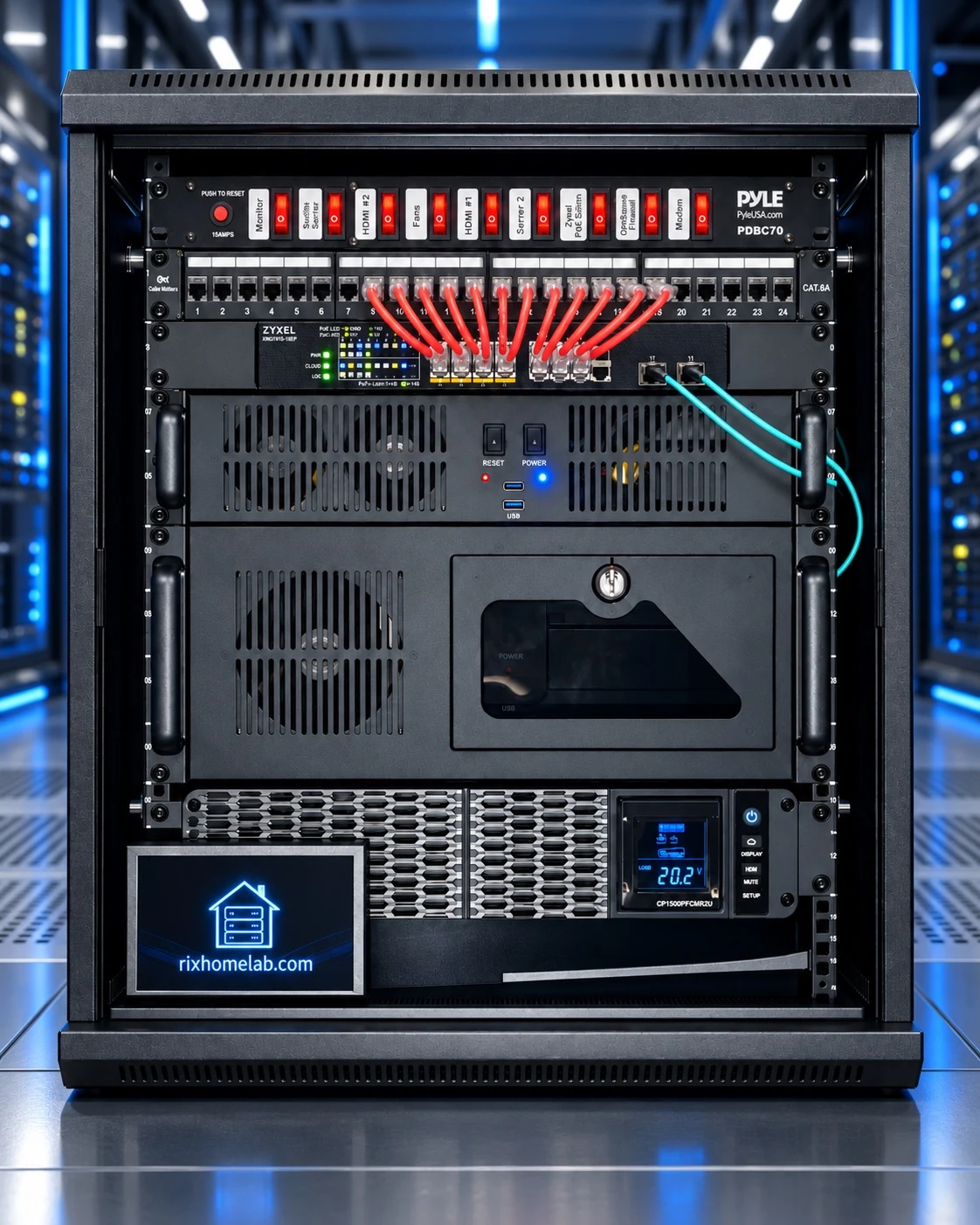
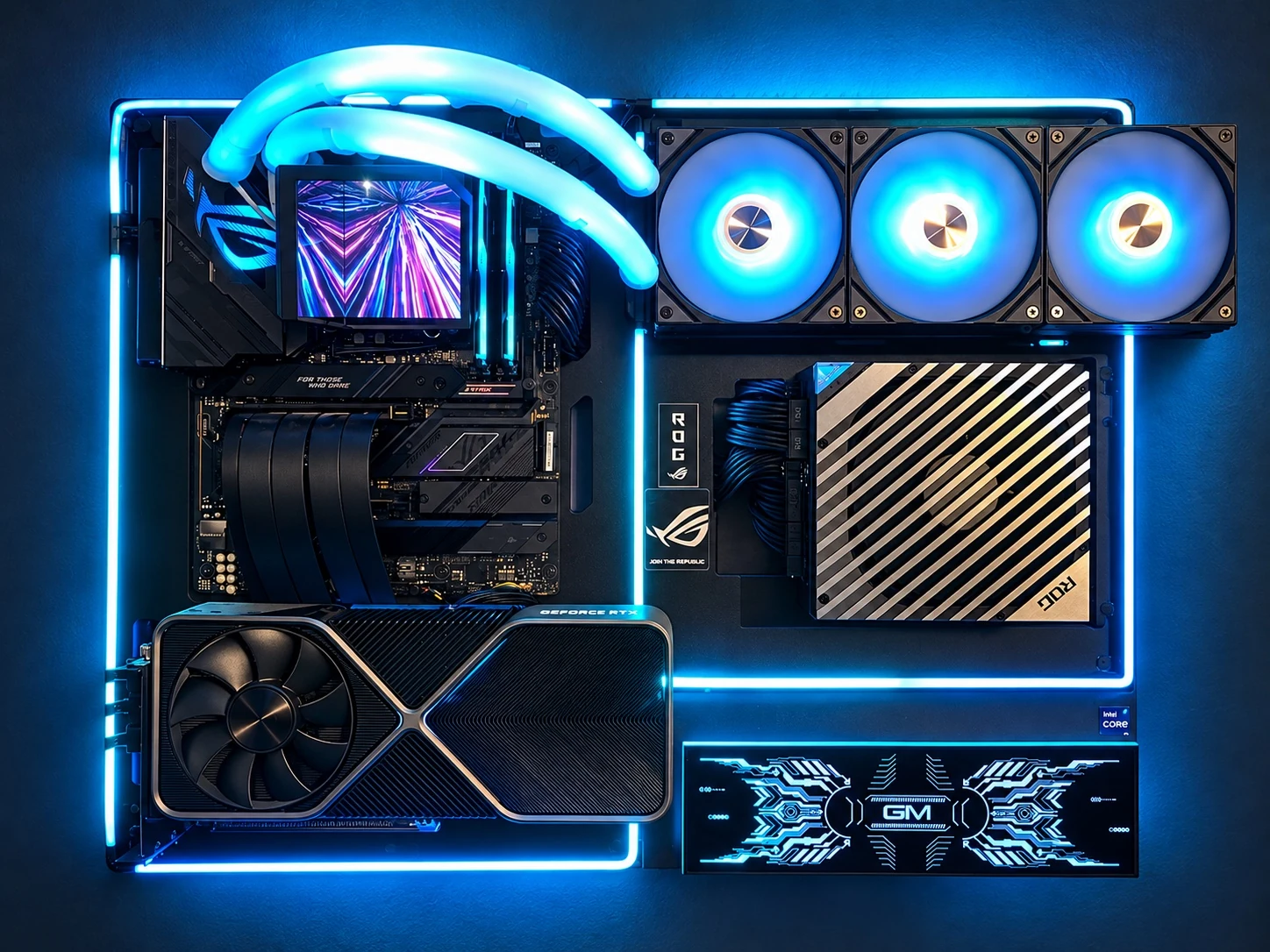
Alongside the servers are the family's gaming rigs, including a Dallas Cowboys-themed PC Rick built for Angie, and his own wall-mounted showpiece, The Beast. And then there's CRASH.
07 / THE PROUDEST HACK
CRASH. The computer that refuses to die.
Rick's proudest technological achievement isn't his most expensive machine. It's an HP EliteDesk 800 mini workstation rescued from the discard pile.
It had an M.2 slot, so naturally, he fitted an NVMe drive. Windows could install onto the drive, but the original BIOS refused to boot it.
Rather than give up, Rick researched the limitation, taught himself to modify BIOS firmware, added NVMe boot support, and flashed the firmware using a Linux-based SPI process. He knew he might permanently brick the machine.
It worked.
Today, that little computer is his expendable test workstation, appropriately named CRASH. It has faced more than one death sentence but keeps coming back like Michael Myers in a horror movie.
08 / THE CLICK THAT HURT
The mistake took seconds. The rebuild took two years.
Every technology enthusiast learns about backups sooner or later. Rick's lesson was particularly brutal.
After transferring newly ripped DVDs to his RixFlix server, he cleaned up what he thought were temporary working folders. One hurried click through an "Are you sure?" warning deleted his entire movie library instead.
No recycle bin. No undo button. Recovery software salvaged little more than fragments. He was devastated.
Starting with DVD number one, he rebuilt the collection. It took two years to get back to where he'd been.
That experience is why RixHomeLab now includes mirrored storage for disk failures and a separate backup server—while better versioned recovery remains part of the ongoing work. A backup strategy is never something he wants to take for granted again.
09 / WHY IT MATTERS
Fueled by curiosity. Powered by independence.
Rick's interest in technology is driven by a persistent question: "What else can I make this thing do?"
Modern subscription culture adds another motivation. When every convenience seems to come with another monthly charge, building and hosting useful services yourself starts looking very appealing.
For Rick, self-hosting is about learning, independence, and taking ownership of the technology he uses. He enjoys the challenge as much as the finished result.
Whether self-hosting saves money after the hardware receipts are counted remains an unresolved scientific question.
10 / LEGACY MODE
Building something worth passing on.
For most of his life, Rick never gave much thought to where all this tinkering might lead. These days, he'd like RixHomeLab to become part of his legacy.
The hope isn't that everyone will find the servers impressive. It's that somebody—family, friends, or a complete stranger—might become curious enough to learn, experiment, and build something of their own. Maybe they'll even help keep the self-hosting spirit alive for the next generation.
Someday RixHomeLab might grow into a commercial suite of hosted services, help fund more hardware, or even produce retirement income. For now, those are possibilities, not promises.
And if some younger enthusiast eventually sees an old guy still building servers and thinks, "Damn, that's pretty badass," Rick will take it.
Built with curiosity. Powered by independence. Occasionally rebooted with profanity.
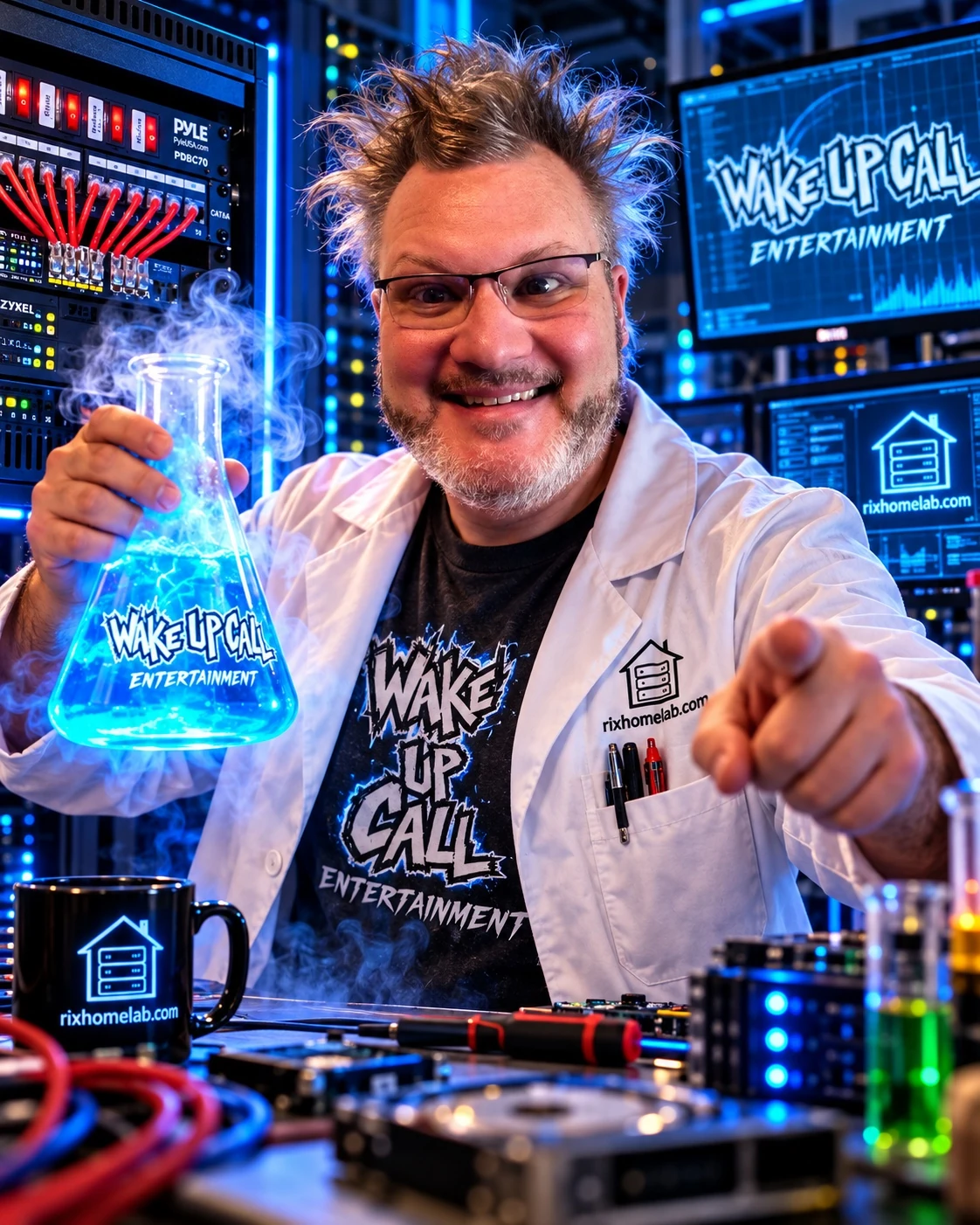
BONUS / UNOFFICIAL LAB PORTRAIT
Also available in mad scientist mode.
Same guy. More cables. Fewer assurances that the experiment has been peer reviewed.
Before RixHomeLab, the curiosity started with music. That part never went away: as DJ Rick, he also runs Wake Up Call Entertainment.
Meet Wake Up Call ↗READY TO EXPLORE?
Let's keep building.
See the lab, explore the projects, or look at the gorgeous wall-mounted computer responsible for another electricity bill.